contact@pioneerkitchenvent.com

Range hoods

Four ways to clear the air above a cooktop.

The right hood starts with where the cooktop sits. Here is how each mounting style works, where it fits, and what it needs from the kitchen.

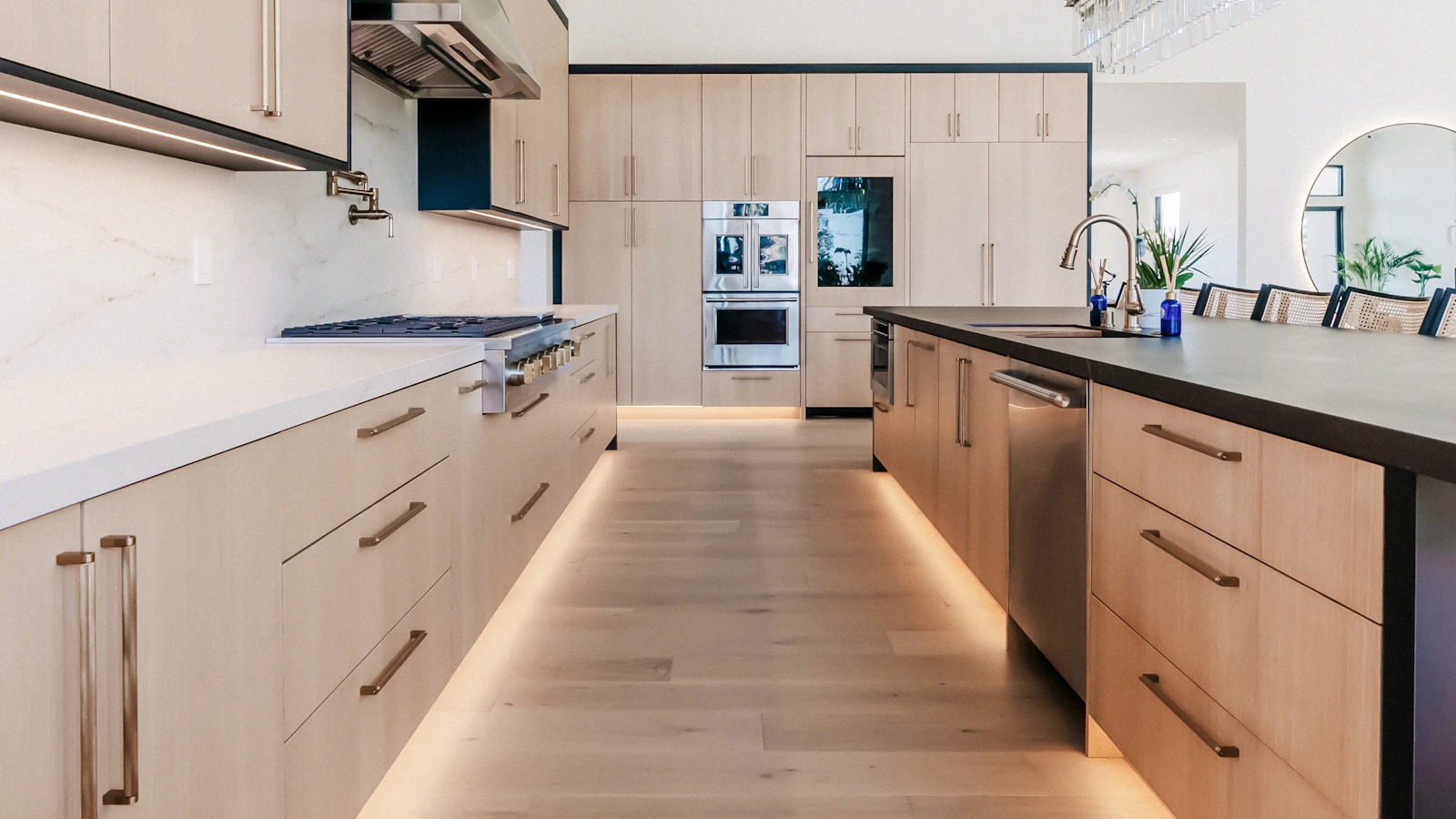
Long kitchen with a chimney hood, light wood cabinets, and a lit toe kick
Fig. 01A wall-mount chimney hood at the end of a long kitchen

01

Wall-mount chimney

Stainless steel wall-mount chimney hood in a white kitchen with a black countertop

The most common hood in American kitchens. A canopy sits above the range and a chimney cover hides the duct as it runs up to the ceiling or out through the wall behind.

Best for

Ranges and cooktops set against a wall, from a standard 30-inch range to a 48-inch professional-style range.

How it works

The canopy gathers the plume as it rises. The blower pushes it through a duct concealed by the chimney cover to a cap on the outside wall or the roof.

Check before you buy

  • Ceiling height, so the chimney cover reaches the ceiling. Extensions exist for tall rooms.
  • Where the duct can leave the house: straight back through the wall, or up.
  • Blocking in the wall to carry the hood's weight.
02

Island

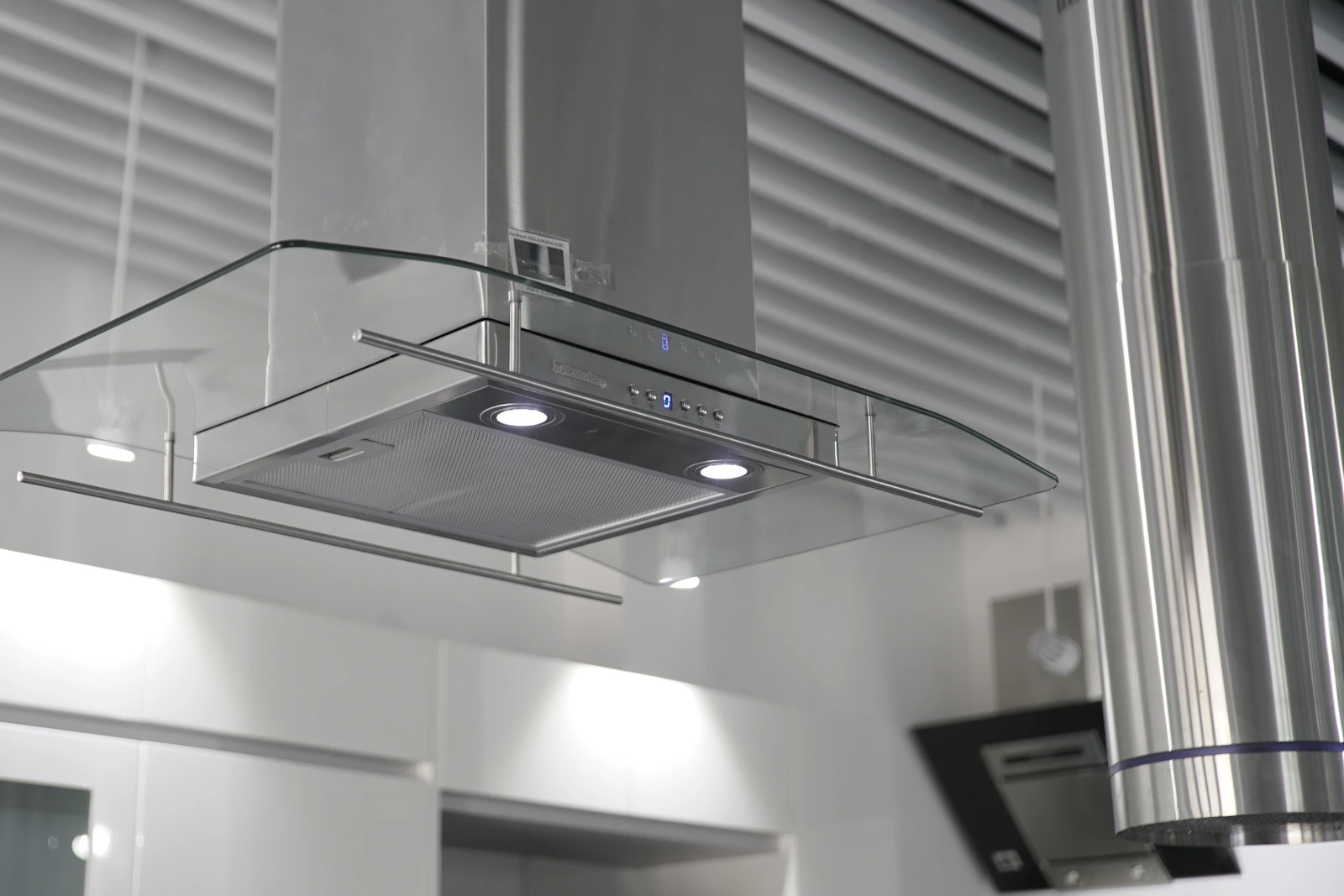
Glass and stainless island range hood with two lights on its underside

An island hood hangs from the ceiling over a cooktop that has no wall behind it. Air reaches the plume from every side, so an island hood has to work harder than a wall hood of the same width.

Best for

Open-plan kitchens with the cooktop set into an island or peninsula, facing the room.

How it works

The hood is supported by the ceiling framing and ducted up through the ceiling cavity to the roof or an outside wall. Cross-drafts push the plume around, so capture area and airflow both go up.

Check before you buy

  • About 150 CFM per foot of cooktop width, versus 100 for a wall hood (HVI guidance).
  • A canopy roughly 3 inches wider than the cooktop on each side.
  • Ceiling framing that can carry the weight, and a clear duct path above.

03

Under-cabinet

Slim under-cabinet hood above a cooktop between white cabinets

A slim hood fastened to the underside of the wall cabinets above the range. It keeps the cabinet line unbroken and suits standard kitchens, condos, and replacements.

Best for

Kitchens with a run of wall cabinets over the range, and anyone replacing an older hood in the same spot.

How it works

The hood vents up through the cabinet above or back through the wall. Where a duct to the outside is not possible, it can recirculate through charcoal filters instead.

Check before you buy

  • Depth: the hood should reach far enough forward to cover the front burners.
  • Lost shelf space in the cabinet above if the duct runs through it.
  • Recirculating removes some odor and grease, but not heat or moisture.

04

Insert & liner

Hood insert hidden in a marble-clad enclosure above a range

An insert is the working part of a hood without the outer shell: blower, filters, lights, and controls. It disappears into an enclosure made of wood, plaster, tile, or stone that matches the rest of the kitchen.

Best for

Custom kitchens where the hood is part of the cabinetry or the architecture rather than an appliance on the wall.

How it works

A cabinetmaker or builder constructs the enclosure. The insert or liner fits into its open bottom and connects to the duct above.

Check before you buy

  • The insert's dimensions against the enclosure opening, before the enclosure is built.
  • Access to filters and lights once everything is finished.
  • Space inside the enclosure for the duct transition.

Side by side

Which hood fits your kitchen?

A quick comparison. The sizing guide turns your cooktop and room into numbers.

TypeMounts toTypical duct routeGood fit forWatch for
Wall-mount chimneyThe wall above the rangeUp through the ceiling or straight out the back wallMost ranges and cooktops on a wallCeiling height for the chimney cover
IslandCeiling framing over an islandUp through the ceiling cavityOpen-plan kitchensHigher airflow, cross-drafts, support
Under-cabinetThe underside of a wall cabinetUp through the cabinet or out the wall; or recirculatingStandard and compact kitchensDepth over the front burners
Insert & linerThe inside of a custom enclosureThrough the enclosure, then up or outCustom and statement hoodsCoordinating the enclosure and insert sizes

In any hood

Six things worth checking, whatever the style.

Capture area

Width and depth matter as much as power. A canopy that covers the front burners catches what a stronger, smaller hood misses.

Airflow

Size it to the cooktop, not to the biggest number on the box. More airflow brings more noise and can bring makeup air requirements.

Noise

Sones describe how loud a hood sounds. Compare ratings at the speed you will use most, not only at the lowest setting.

Filters

Baffle filters channel grease into a trough and are easy to wash. Mesh filters trap grease in layers and need cleaning more often.

Lighting

Warm-to-neutral LED task light with good color rendering shows food the way it really looks.

Controls

Variable speed, a delay-off timer that keeps running after you finish, and a filter reminder are worth having.

Not sure which one you need?

Send us the cooktop width, the fuel, and a photo or plan of the wall or island. We reply by email.

contact@pioneerkitchenvent.com