
Compare
Four finishes, one shape.
Brushed stainless
A fine directional grain that hides fingerprints better than a mirror polish. Wipe it in the direction of the grain.
In real kitchens
How each finish reads in a room.
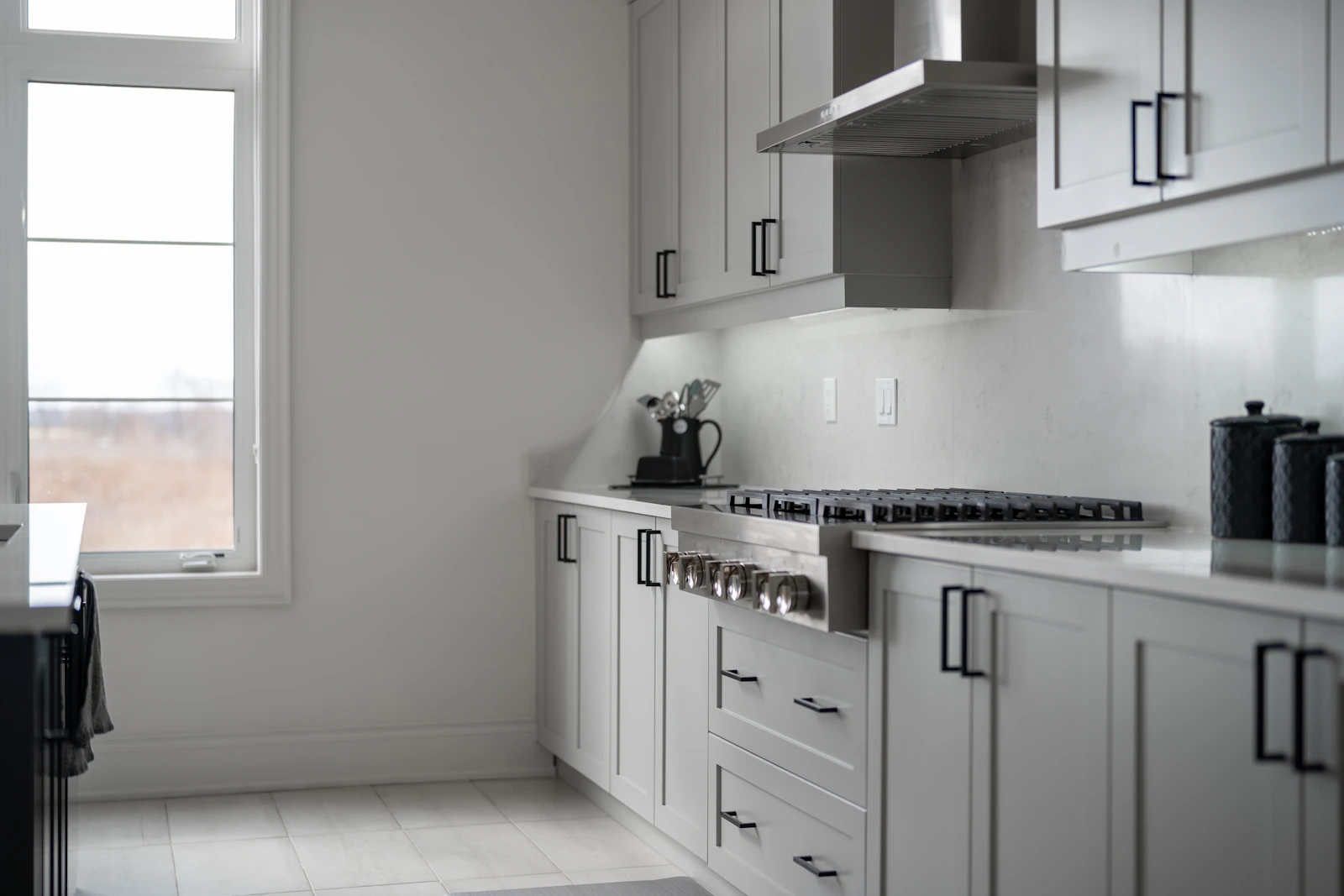
Brushed stainless
Pairs with stainless appliances and almost any cabinet color. The grain softens reflections and keeps smudges from standing out.
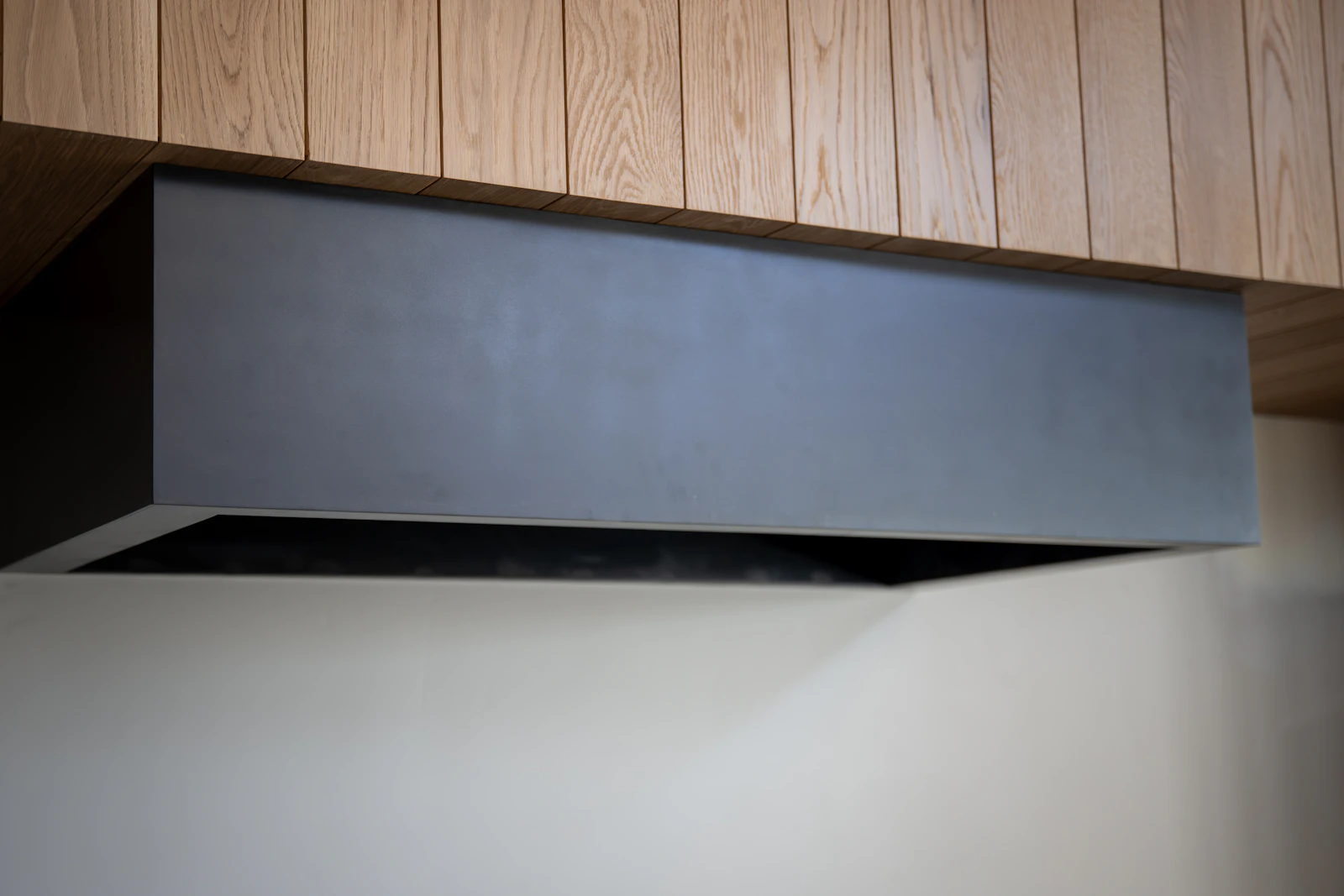
Matte black
A strong graphic shape against wood, white tile, or plaster. Choose it when you want the hood to be seen.
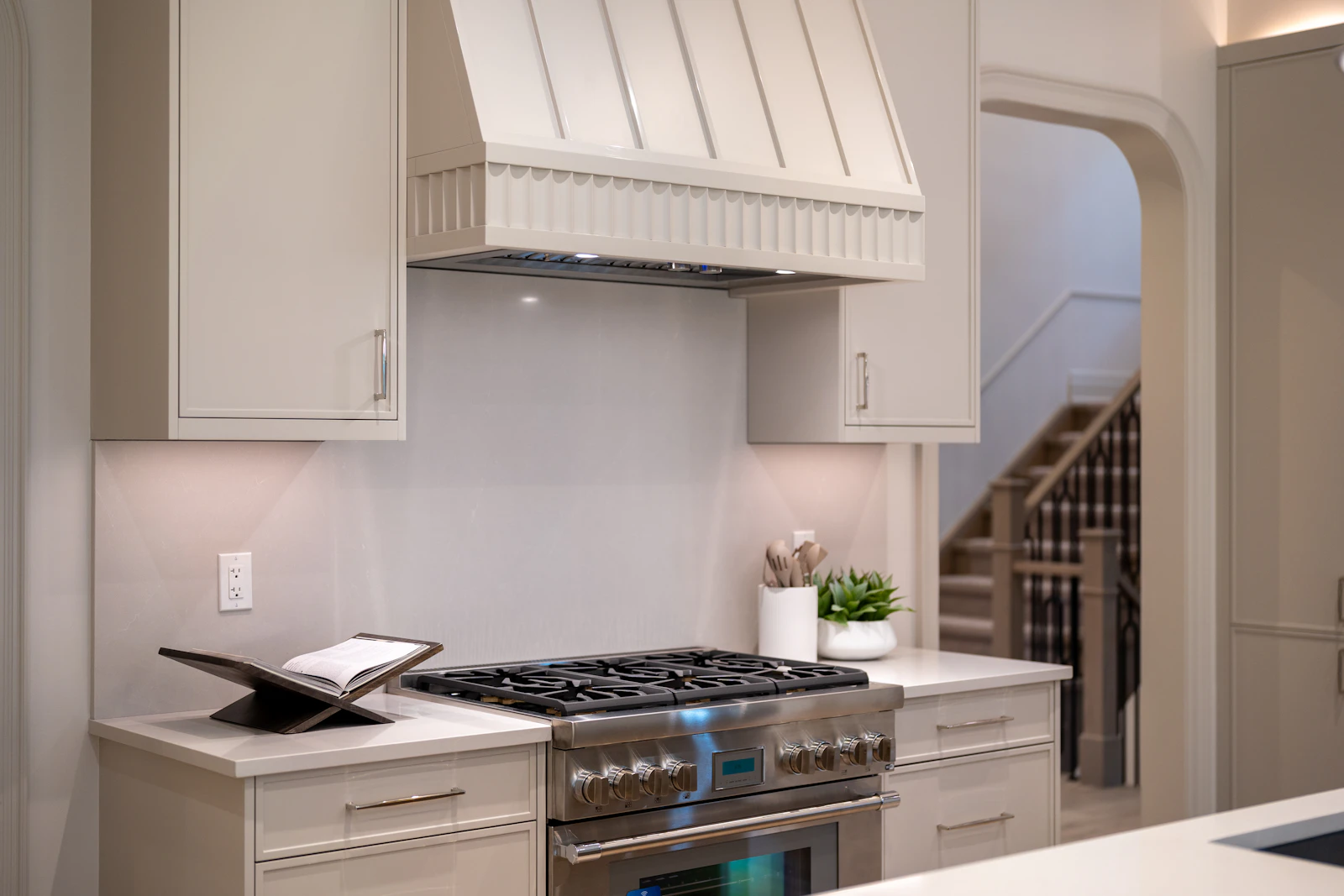
Warm white
Blends into painted cabinetry and plastered walls, so the room reads calm and the cooktop takes the attention.
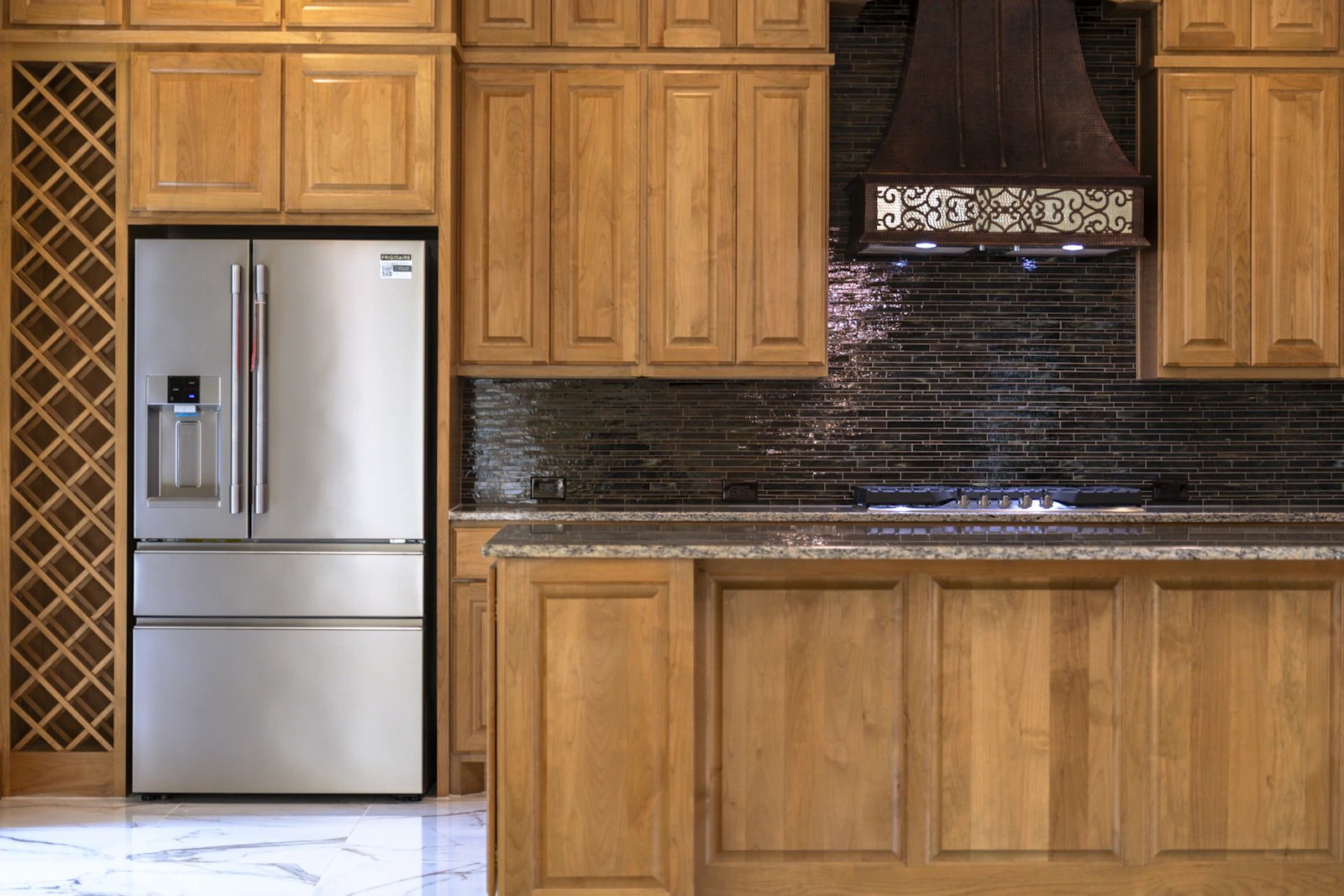
Copper
Warm and traditional. Unsealed copper darkens and develops a patina over time; sealed copper keeps its color longer.

Materials
What stainless steel grade means.
Most stainless hoods use one of two grades. Type 304 contains more chromium and nickel and resists corrosion better. Type 430 is magnetic, costs less, and is more prone to surface rust in humid or salty air.
Both are used in good hoods. It is worth asking which grade a hood uses for its exterior and for its filters, especially near the coast or above a busy gas range.
Details
Filters and controls.
Baffle filters
Angled stainless channels force air to change direction, so grease condenses and drains into a trough. Many are dishwasher safe.
Mesh filters
Layers of aluminum mesh trap grease as air passes through. Light and inexpensive, but they need washing more often.
Charcoal filters
Used for recirculating installations to absorb odors. They cannot be washed and are replaced on a schedule.
Touch controls
Flush and easy to wipe clean. Look for clear feedback, so you know which speed is running at a glance.
Push buttons and knobs
Positive and easy to use with wet or greasy hands. A knob makes fine speed changes quick.
Delay-off timer
Keeps the fan running for a few minutes after cooking to clear what is left in the air, then shuts off on its own.
Care
Keeping a hood looking new.
Always check the care instructions for your hood. These general habits work for most finishes.
Brushed stainless
Use warm water, a little mild dish soap, and a soft cloth, wiping in the direction of the grain. Dry it to avoid water spots. Skip chlorine bleach, steel wool, and abrasive powders, which scratch and can stain.
Matte black and warm white
Wipe with a soft cloth and mild soap. Avoid abrasive pads and strong solvents, which can polish a matte surface into shiny patches. Clean splashes early, before heat bakes them on.
Copper
Unsealed copper is a living finish: it darkens and develops a patina, which many owners prefer. Clean it with mild soap and water. Use a copper cleaner only if you want to bring back the original shine. Sealed copper needs only gentle cleaning; harsh cleaners can damage the sealer.
Filters
With regular cooking, wash metal filters about once a month, more often if you fry or stir-fry frequently. Soak them in hot, soapy water or run them through the dishwasher if the manufacturer allows it. Replace charcoal filters on the schedule in the instructions.
Lights
Turn the lights off and let them cool before cleaning the lenses. A cloth dampened with soapy water removes the grease film that dims them over time.
Choosing a finish for a specific room?
Send a photo of the cabinets and the backsplash. We will tell you how each finish is likely to read.
contact@pioneerkitchenvent.com