Integral lighting
Light where you cook.
A hood light is the fixture closest to the cooktop. Its color, its quality, and how far it dims change how food looks and how the kitchen feels late at night.
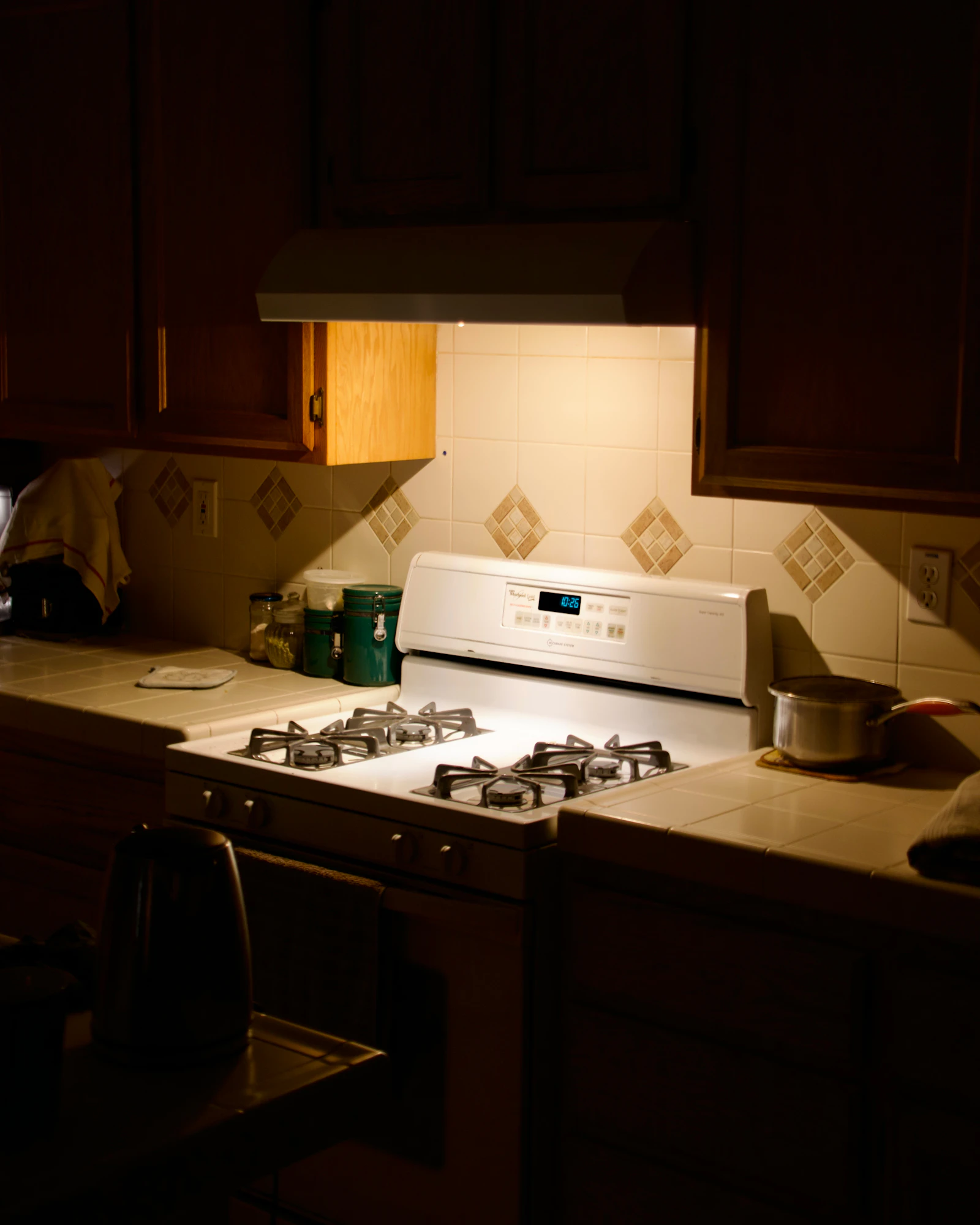
Try it
Hood light
Color temperature
3000 K is a warm white, similar to halogen.
A simulation on a single photograph, for comparing settings only.
Color temperature
Warmer or cooler, measured in kelvins.
Lower numbers look warmer and more amber. Higher numbers look whiter and cooler. Most kitchen lighting sits between 2700 K and 4000 K.
2700 K, warm
Close to the color of an incandescent bulb. Flattering on wood and warm paint colors, and restful in the evening.
3000 K, warm white
Similar to halogen. The easiest choice to match with recessed lights and pendants elsewhere in the kitchen.
4000 K, neutral
Crisper on stainless steel, stone, and cool colors, and closer to daylight for detailed prep work.
Swatches are approximate screen renderings of each color temperature.
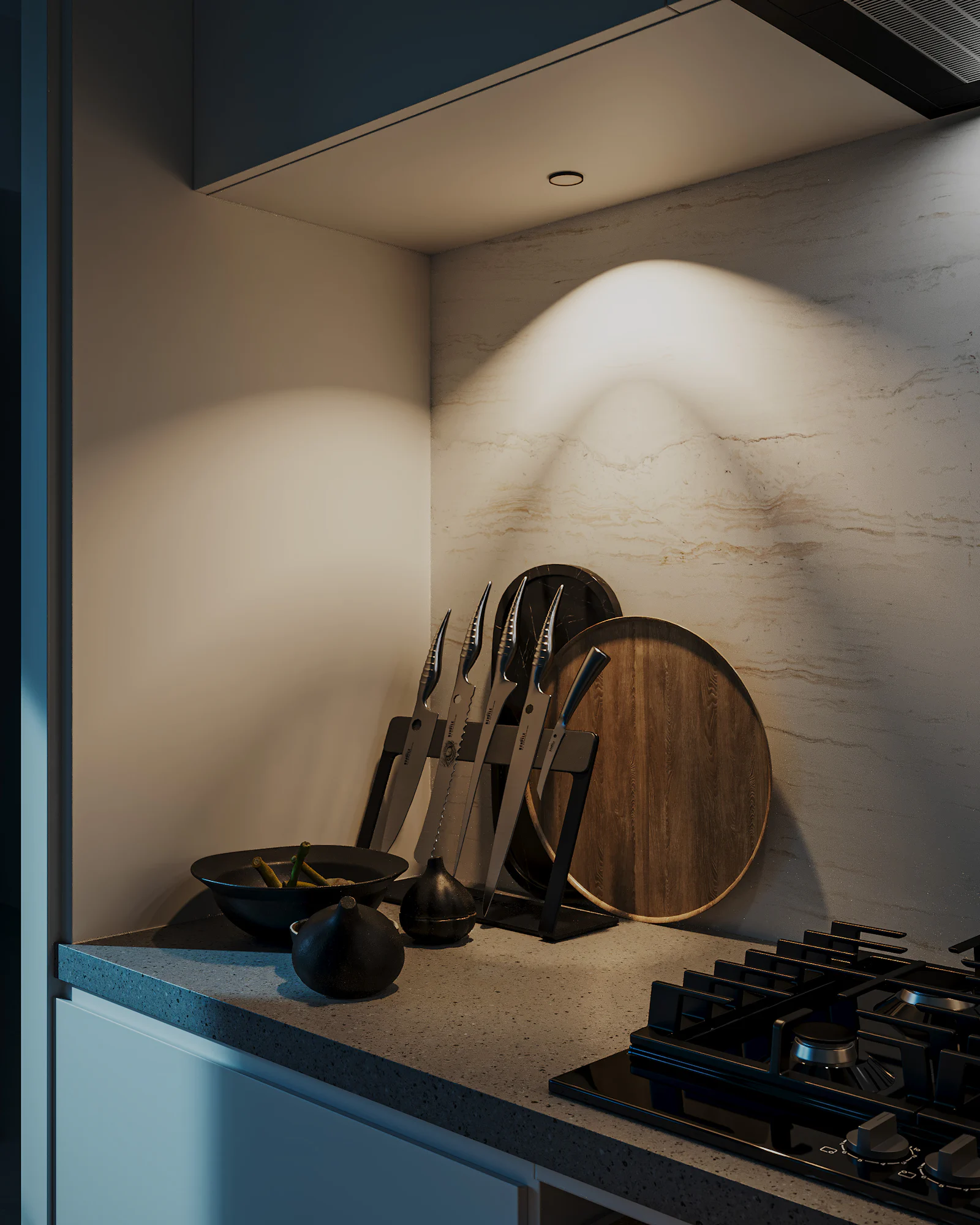
Color rendering
Why some lights make food look gray.
Color temperature describes the color of the light itself. Color rendering describes how faithfully that light shows the colors of the things it falls on.
The usual measure is the color rendering index, or CRI, which compares a light source with a reference source on a scale that tops out at 100. A light with a low CRI can make a seared steak look brown-gray and greens look dull. For a kitchen, look for a CRI of 90 or higher.
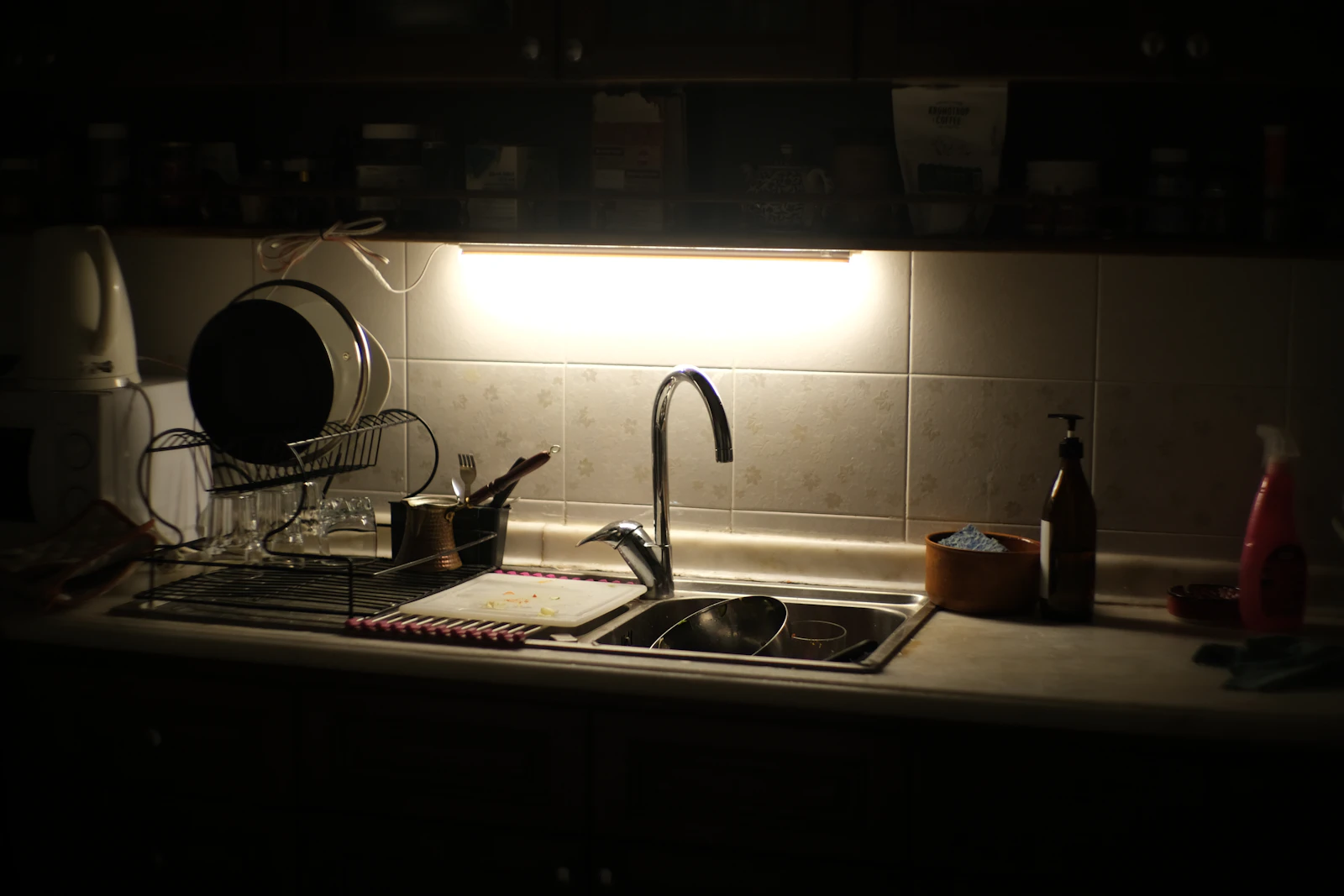
Layers of light
The hood light is one layer of three.
Good kitchen lighting is layered. Recessed lights and pendants light the room. Under-cabinet lights light the counters. The hood light is task lighting for the cooktop, the one place you need to see color and texture clearly while something is moving fast.
Keep the color temperature of the layers close to each other. A 4000 K hood light under 2700 K pendants will look blue by comparison.
What to look for
Hood lighting, point by point.
Even coverage
The light should reach the back burners and the front edge of the cooktop, without a bright spot in the middle and dark corners.
Smooth dimming
A low setting doubles as a night light. Lights that dim smoothly are more useful than a simple high and low.
LED, not halogen
LEDs use less power and run cooler than halogen bulbs, which matters in a fixture a couple of feet above boiling water.
No glare
From where you stand, you should see lit food, not the light source. Recessed or diffused lights keep glare out of your eyes.
Easy to clean
Grease settles on everything above a cooktop. Flat, sealed lenses wipe clean; exposed bulbs and textured covers collect residue.
Serviceable
Ask whether the LED modules can be replaced on their own. A light that fails should not mean replacing the whole hood.
Matching a hood to your lighting plan?
Tell us the color temperature of the other lights in the kitchen and we will suggest a hood light to match.
contact@pioneerkitchenvent.com